
Introduction: Industry paradox
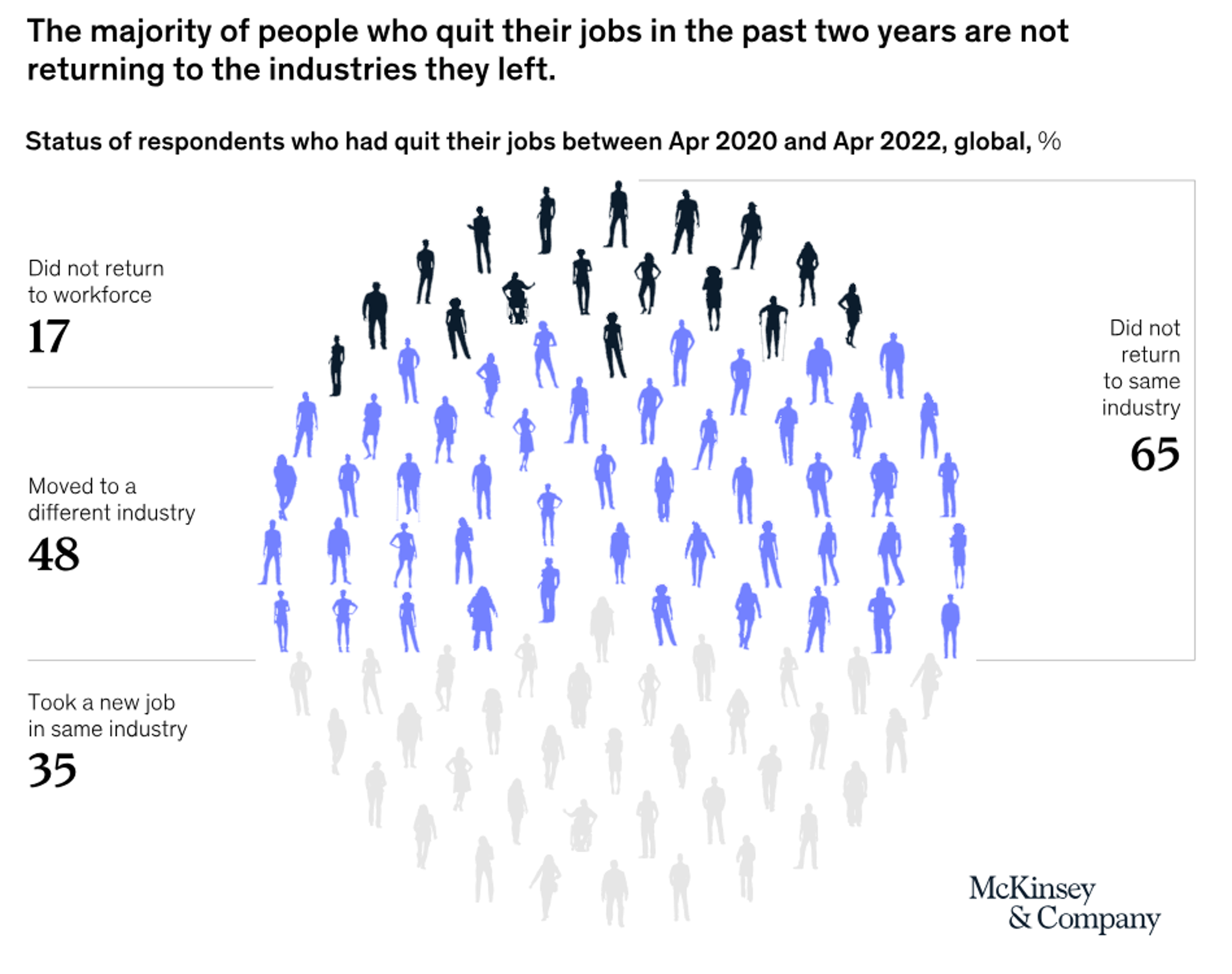
In the post-pandemic world, the search for niche expertise has become the norm. According to a McKinsey Report published in 2022, only 35% of those who quit in the past two years took a new job within the same industry. The finance and insurance sectors showed 65% of workers either changed industries or did not return to the workforce. The public and social sector saw an even higher rate at 72%. These trends are leading senior roles towards hyper-specialization, which seems advantageous, but hides potential pitfalls that can ultimately stifle innovation and growth.
Cross-Industry Experience
I have been fortunate to gather a breadth of experience working across many industries in my career. Whether it was with my first role in PR, Sports Marketing, Grassroots, Public/Private Partnership, or B2B, I have consistently been successful in leveraging my professional understanding of key strategies and tactics to reach niche audiences in sectors such as: government, luxury, tourism, healthcare, finance, SaaS, and tech. Cross-industry knowledge proved valuable in strengthening our approach. In one example, we used grassroots marketing techniques typically seen in the nonprofit sector and implemented a campaign within the tech space that led to an average acquisition rate of 35% in each target region.
Challenges with Over-Specialization
A study by the Faculty at Computer and System Engineering Laboratory wrote about the dangers of over-specialization leading to problems in algorithms and testing. This sentiment is echoed in other niche areas of study. Looking at the broader trends, as outlined in recent Gartner and HBR reports, there’s a shift that cannot be ignored. There are many resources outlining statistics around exhaustion in the workplace. Operational challenges continue to be the key root to exhaustion when teams continue to ignore best practices and look for solutions in broken systems that are simpler to improve than many people would like to admit.
Regardless of the people we work with, the best colleagues to get the job done are often the ones who know the right questions to ask during each decision. The reason most companies aren’t seeing their numbers grow is because they keep hiring people who are so pigeon-holed into their niches that they don’t see what doesn’t make sense. Overworked team members, stifled by operational challenges, are rarely able to look beyond immediate deadlines. It’s a recurring issue that has led me to focus on identifying operational gaps and supporting team members by searching for the simplest path to short-term growth while ensuring long-term success. It has been an honor to be acknowledged across my career for using best practices to identify and prioritize the causes of operational and revenue-building challenges while collaborating with teams to outline solution-oriented paths through existing tactics and resources.
It has been an honor to be acknowledged across my career for using best practices to identify and prioritize the causes of operational and revenue building challenges and working with the teams to outline the path to the solution through existing tactics and resources.
Addressing Operational Gaps
In one of my roles in the finance world, I realized what the company needed was not more immediate customers but a way to streamline their existing operations for a better customer experience. This would allow internal teams to be a little less burdened and in turn, produce more high-caliber work. While the CEO hoped to increase customer acquisition by another 15%, we were able to prioritize solving operational challenges and increased internal efficiency by 75%, web traffic by 85%, and conversions from form submissions by 18% within a year. I don’t know if I was successful there, but I am thankful to appreciative colleagues who continue to share their positive thoughts about their ability to scale since the marketing operations improved. The goal of a marketer is to support businesses by finding a way to streamline their resources to maximize their revenue – something I confidently did there.
Paralyzed by Technology
With the increasing use of automation and AI in streamlining the hiring process, there’s a growing reliance on algorithms to filter candidates based on extremely specific expertise. While this approach might save time during onboarding, it often overlooks candidates who are better qualified to identify and address industry roadblocks. This focus on niche skills can lead to a workforce that excels in technicalities but lacks the broader vision needed for innovation and problem-solving. The danger here is not just in missing out on talent; it’s about creating an echo chamber of expertise that fails to adapt to evolving market needs or recognize opportunities for significant improvements.
Rethinking Hiring Practices
Knowing the trends and historic information of an industry makes onboarding much simpler and guarantees key pieces of knowledge that could take someone else a lot longer to comprehend. Unfortunately, we’ve seen a rising trend of “ghost jobs” in these industries where companies post positions with no intentions of hiring and (potentially less discussed) use interviews as free strategic consultancy. Getting answers to their biggest challenges and posing them as interview questions seems outrageous, but plausible.
Hiring is challenging with a never-ending supply of candidates. Being strategic about how we’re narrowing the pool is extremely important if the goal is collective organizational success. Instead of limiting candidates based on qualifications, roles should specify skills needed. In the past year, LinkedIn has seen a 21% increase in job postings advertising skills and responsibilities instead of qualifications, and the number of positions that don’t require a degree increased by nearly 40% in 2020, compared to 2019.
Most job applications are full of checkboxes for gender, pronoun, race, disability or veteran status, but how can recruiters find good talent when sticking to industries that haven’t allowed for much new talent historically. The companies in each industry keep hiring and firing the same pool of senior members and lose the opportunity for significant growth.
I encourage hiring teams to reconsider their approach to evaluating talent and prioritize finding the right skills rather than specific experience. This is why I started my company, Efficient Impact, to support small businesses with their strategic needs. These skills are easy to understand once we know the concepts, we just need to find ambitious talent who are knowledgeable and curious enough to know which questions are the right ones to ask and experienced enough to know how to find the solutions. I invite you to share your experiences and thoughts on overcoming the challenges of niche expertise in the comments below or connect with me on LinkedIn to continue this crucial conversation.
Sources:
https://hbr.org/2024/01/9-trends-that-will-shape-work-in-2024-and-beyond
https://hbr.org/2019/07/6-causes-of-burnout-and-how-to-avoid-them
https://www.mdpi.com/2079-9292/11/2/242
https://hbr.org/2022/02/skills-based-hiring-is-on-the-rise

Leave a Reply